
The Ultimate Guide to Situational Awareness (The #1 Skill for Staying Safe)
Ask most people what self-defence looks like and they will describe something physical. A punch, a hold, a technique for getting out of a grab.
That is not where I would start. Not even close.
The single most useful thing I teach, the skill that has kept more of my students out of trouble than anything else, is this: knowing what is going on around you before anything happens.
Situational awareness. It sounds like military jargon. It is actually just the habit of paying attention, in a deliberate way, so that nothing catches you completely off guard.
I want to explain exactly what it is, how it works, and how you start building it today. No training gear required.
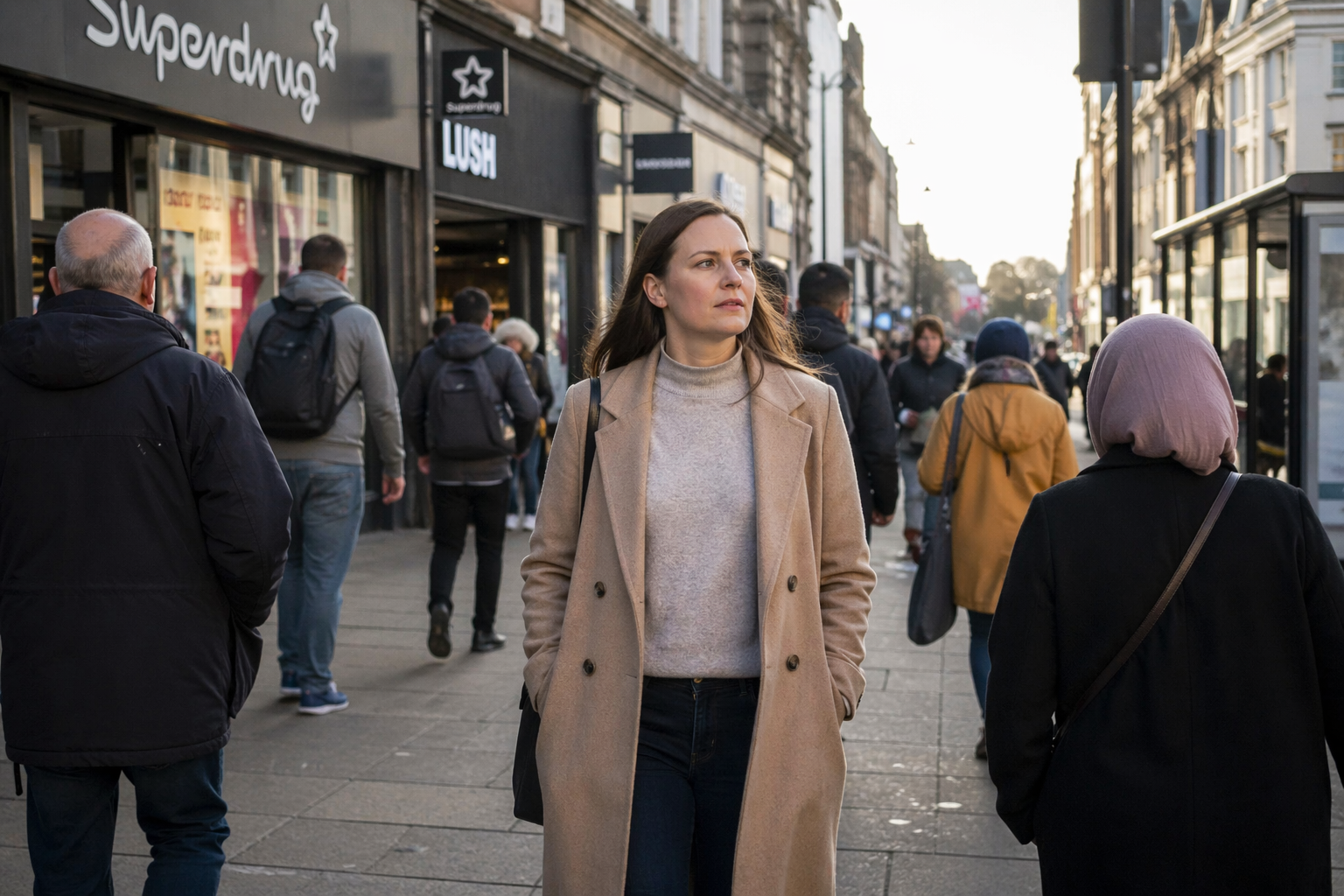
A person walking through a busy town centre, looking alert and relaxed rather than distracted by their phone
Why This Matters More Than Any Physical Skill
Here is a simple truth about dangerous situations. The person who sees trouble coming early has options. They can leave. They can cross the road. They can position themselves differently, call someone, or attract attention. The person who does not see it coming until it is right in front of them has almost none of those options.
Physical training is valuable. I teach it every week and I believe in it. But physical training is your fallback when everything else has failed. Awareness is what makes sure you rarely get to that point.
I have had students tell me, months into training, that they felt safer almost immediately, before they had learned many techniques at all. What changed? They started watching. They started noticing. And they realised that most situations have warning signs you can read if you are actually looking.
The Colour Code System
This framework was developed by Colonel Jeff Cooper and it gives you something concrete to aim for rather than a vague instruction to "be more aware."
White: You have checked out completely. Phone in hand, headphones in, thoughts somewhere else. You would not notice someone following you until they were close enough to touch you. Most people spend most of their time here, especially in familiar environments where they feel safe.
Yellow: Relaxed but present. You are not anxious or scanning for threats around every corner. You are just actually here, in this moment, noticing what is around you. Exits, people nearby, anything that seems slightly out of place. This is where you want to spend your normal daily life.
Orange: Something specific has caught your attention. A person who has changed direction when you did. A group whose energy shifted when you walked past. A situation that is escalating nearby. You are watching it. You have options ready in your head.
Red: You are responding to something immediate. This is where physical skills become relevant. And if you have been in Yellow and Orange, you arrive here with far more preparation and far more time than if you were sitting in White.
The transition from White to Yellow is where most people can make the biggest improvement to their personal safety. Immediately. Without any other training at all.
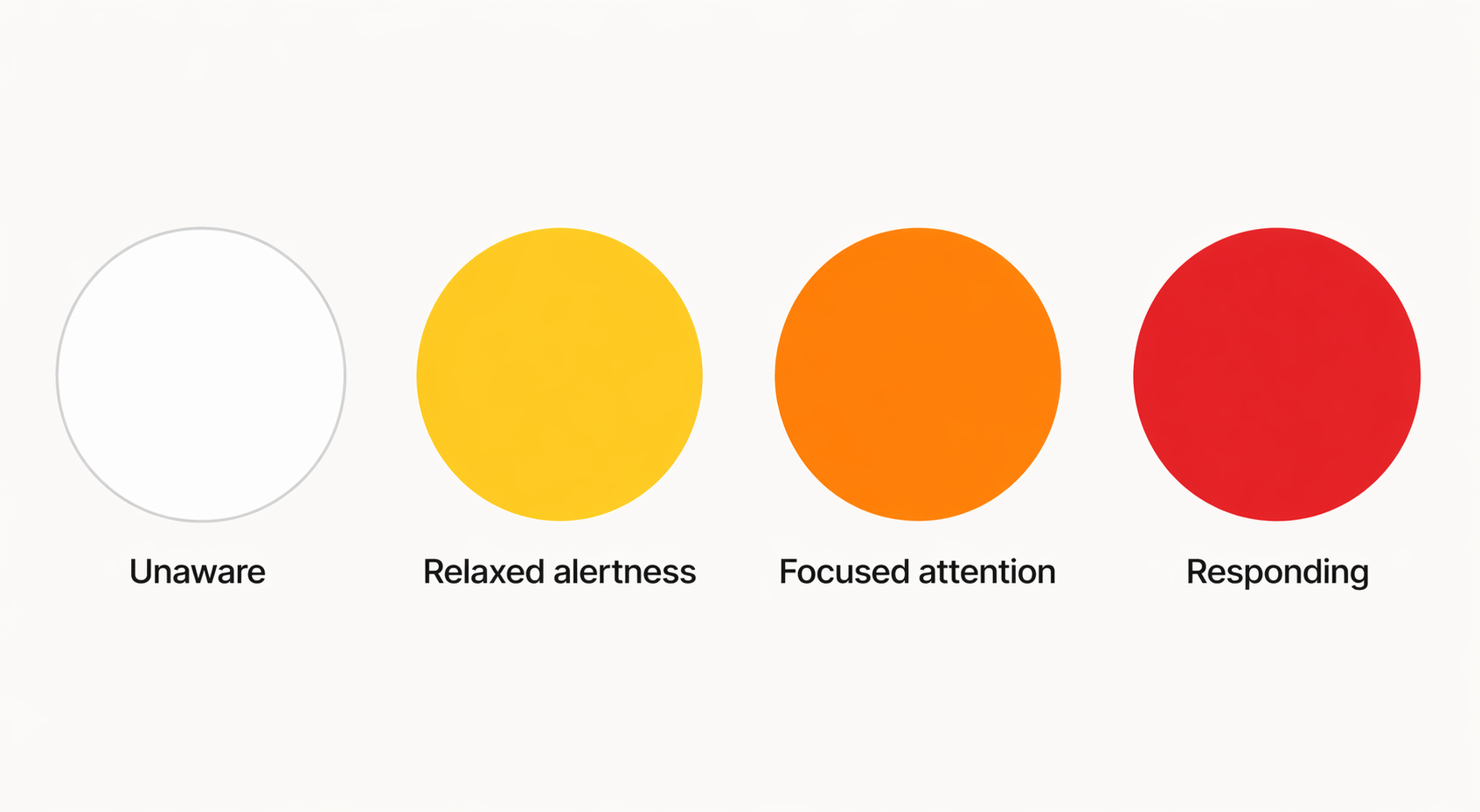
The four awareness levels at a glance
What Actually Gets People Into Trouble
From years of teaching, I can tell you the patterns I see most often when students describe situations that went wrong or nearly went wrong.
Phone out while walking, especially at night. This is the big one. You are advertising that you are distracted, you cannot see what is coming, and you may have something worth taking. All at once.
Headphones in both ears. Same problem. You have removed your ability to hear footsteps closing in, a raised voice behind you, the sound of running.
Sitting with your back to the door. Less immediately dangerous, but it puts you behind everyone else in the room in terms of information. If something happens near the entrance, you are the last to know.
Assuming familiar equals safe. People get complacent on routes they know well. Routine is a liability if anyone else notices your routine too.
Overriding instinct to be polite. This one I feel strongly about. When something feels wrong, most people talk themselves out of it. They do not want to seem rude. They do not want to make a scene. They convince themselves they are imagining things, but usually, they are not.
Habits You Can Build Starting Today
None of these requires any training. They just require a decision.
The entry check. Every time you walk into a new space, give yourself five seconds before you get absorbed in whatever you came to do. Where are the exits? Who is nearby? Does anything feel off? Five seconds. It becomes completely automatic within weeks.
Back against something solid. In restaurants, waiting areas, public transport, try to position yourself where you can see the space rather than face a wall. You are giving yourself more time to read what is happening.
Phones away when moving. Especially at night, especially alone, especially in unfamiliar areas. If you need to use your phone, stop walking, stand with your back to something, do what you need to do, put it away before you move again.
Notice who is around you every few minutes. Not in an anxious way. Just a calm, deliberate look. Who has been near you for a while? Has anyone seemed to adjust their pace to match yours?
Trust the uncomfortable feeling. If someone or something is making you uneasy and you cannot explain why, that is information. Your brain is processing things faster than your conscious mind can put into words. Act on it. Move away, leave the space, call someone. You do not owe anyone a logical reason.

Simple daily habits build real awareness over time
Teaching This to Your Children
If you are a parent, this section matters.
Children are impulsive and present-focused, which is exactly how they are supposed to be. You cannot just tell a child to be more aware and expect it to stick. What does work is making it into a habit through games and repeated casual conversation.
With younger children, try observation games. How many red things can you see? How many exits does this room have? Who is sitting closest to the door? It sounds like nothing. Over time, it builds the habit of actually looking at spaces rather than drifting through them.
With older children and teenagers, the conversation I would have is about gut feelings and permission. Young people, particularly girls, are often socialised to push through discomfort, to be polite, and not to cause a scene. I tell every young student I work with the same thing: your gut is not something to apologise for. If it is telling you something is wrong, you are allowed to leave. You are allowed to make noise. You do not need a reason that anyone else would accept.
Where Physical Training Fits In
Awareness gets you most of the way there. It is not the whole picture.
Occasionally, despite everything, situations develop. Someone gets past your awareness. Things happen fast. In those moments, physical training matters. The two work together: awareness gives you time, physical skill gives you options when time runs out.
What we build at M-Power Krav Maga starts with this foundation because a physically capable person with poor awareness is far less safe than a physically capable person who also sees things coming.
If you are not training yet, start with your eyes. Keep them open. Keep them moving. That is where everything else begins.
