The Complete Beginner’s Guide to Self-Defence: Skills, Mindset & Safety Essentials
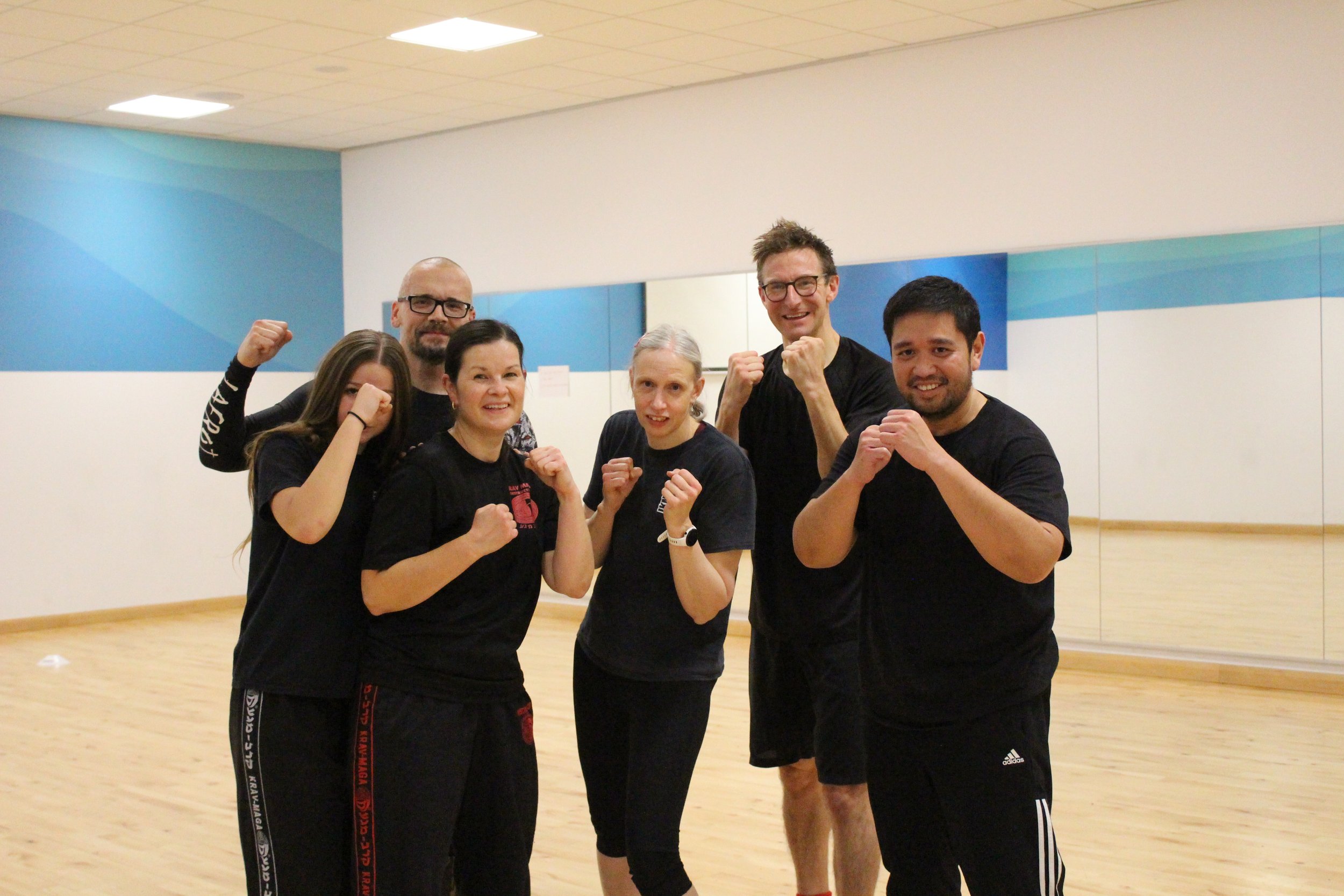
For adults in Reading & Caversham who want to feel safer, stronger, and more confident, no matter your fitness level.
Why People Start Thinking About Self-Defence
Most adults don’t suddenly wake up and decide to learn self-defence. It usually comes from a moment like a walk home that didn’t feel right, an encounter that made your stomach twist, or even a passing thought about wanting to feel more confident in public spaces. These moments stick with you because deep down, you know your safety matters. Feeling capable matters. And feeling prepared matters.
What Self-Defence Actually Means in Everyday Life
Self-defence training isn’t about becoming aggressive or learning how to fight. It’s about building a kind of everyday confidence that changes how you move through the world. It helps you feel grounded, aware, and in control. It teaches you how to handle yourself when life becomes unpredictable. Whether you’re in Reading town centre, walking in Caversham at night, or navigating a busy car park after work, knowing you can rely on your own skills is powerful.
The Myth of Movie-Style Fighting
A common misconception is that real self-defence looks like what you see in films. In reality, confrontations happen quickly, unexpectedly, and without rules. There are no referees or “fair fights.” Real self-defence is practical, simple, and built for people of all ages and fitness levels. It focuses on keeping yourself safe rather than winning a fight. Most of the time, the goal isn’t to defeat someone. The aim really is to get home safely.
Understanding the Freeze Response
One of the first things we talk about with beginners is the natural “freeze” response. It happens to everyone, even to trained professionals. Your mind goes blank for a split second, your breath catches, and your body hesitates. This isn’t weakness; it’s biology. Self-defence training helps you understand this response and gives your body something better to do when that moment hits. Over time, you learn to stay calm, make decisions faster, and act with clarity instead of fear.
Why You Don’t Need to Be Fit to Start
Many adults worry they aren't fit enough to start training. This is one of the biggest barriers that stops people from taking the first step, and it’s completely unnecessary. You do not need to be in shape to begin learning self-defence. The techniques rely more on body mechanics than raw strength. Your fitness naturally improves as you train, almost without you realising it. Your breathing gets steadier, your movements get smoother, and everyday tasks start to feel easier. It’s progress that arrives quietly and consistently.
The First Skills Every Beginner Starts With
As you settle into training, you begin learning skills that may seem small at first but make a huge difference in real situations. You start with how you stand, how you shift your weight, and how you move your feet so you don’t lose your balance if someone pushes you or grabs you. You learn how to use your palms, elbows, and knees in simple, effective ways that don’t require speed or athleticism, no special talents, just the right movement at the right time. You also become comfortable using your voice, not in an aggressive way, but in a clear and confident tone that tells someone to back off or stay away. These skills build on each other quietly, and before long, you realise your body knows what to do without you having to think about it.
The Safety Essentials You Build Without Even Trying
Alongside the physical skills, you also start absorbing the essentials of staying safe day-to-day. This isn’t about walking around feeling suspicious or on edge, paranoid. No. It’s about being calmly aware of what’s happening around you. You notice exits, open spaces, and the people in your immediate environment. You become more comfortable trusting your instincts when something doesn’t feel right, instead of brushing it off. You learn the importance of keeping a bit of distance when you’re unsure about someone’s intentions, and how small adjustments in where you stand or how you carry yourself can make you less vulnerable. These habits develop naturally over time and become part of how you move through the world, often without you even realising the shift.
Why Women Often Learn Faster Than They Expect
Women, in particular, often feel anxious about joining self-defence training, but they tend to learn quickly. Awareness, intuition, and social reading are strengths many women already possess, and they translate extremely well into self-defence. At M-Power Krav Maga, we’re proud to have the only Expert-level female instructor in the local area, which makes an enormous difference for women who want a safe, supportive, and truly inclusive place to train. Many women tell us they feel seen and understood in a way they didn’t expect.
How Functional Fitness Supports Real-World Ability
Our training goes beyond techniques. It also includes functional fitness designed around real-life demands. Our endurance, agility and combat fitness classes help you: stay composed when your heart rate is high; improve your reactions and footwork, making you harder to overpower; and safely prepare your body to cope with the stress and unpredictability of real situations. Nothing is intimidating, and everything is adapted for beginners. You grow at your own pace.
What Your First Class Will Actually Feel Like
If you’re wondering what your first class will feel like, imagine walking into a warm, friendly environment where people smile at you as you enter. There’s no ego, no competitive pressure, and no feeling of being watched or judged. The instructor guides you through gentle warmups, simple movements, and techniques taught step by step. You practise with real people who work in offices, NHS workers, parents, students, and others just looking to feel safer. By the end of the session, most beginners feel proud, lighter, and surprised by how capable they already are.
Who Self-Defence Training Is Really For
Self-defence training is for anyone who wants to feel safer and more confident. It’s for adults who walk home at night and want peace of mind. It’s for normal people who deal with unpredictable situations. It’s for women who want practical protection skills. It’s for beginners who’ve never trained before and don’t know where to start. And it’s for anyone who simply wants a supportive, local community that helps them feel stronger mentally and physically.
Your First Step Starts With One Simple Class
If you’re in Reading or Caversham and you’ve been thinking about trying a class, the easiest way to begin is with a trial session. One hour is all it takes to understand what self-defence really is that is not fear-driven, not aggressive, but empowering, supportive, and life-changing in ways you can feel immediately.
Book your trial class now and take the first step toward feeling stronger, safer, and more confident in your everyday life.
FAQs:
1. Is self-defence suitable for complete beginners?
Absolutely. Most people who join have never trained before. The skills are simple, practical, and designed for normal adults with no experience.
2. Do I need to be fit to start self-defence training?
Not at all. You get fitter through the training. Everything is adapted for beginners, and you progress at your own pace.
3. What if I freeze or panic in real situations?
Freezing is normal. Training helps your body understand what to do in moments of stress so you can stay calmer and respond more confidently.
4. Are the classes suitable for women?
Yes — very much so. M-Power has the only Expert-level female instructor in the area, and many women join specifically for a supportive, inclusive environment.
5. What will I learn in my first few classes?
You’ll learn simple posture, movement, boundary-setting, and basic ways to escape common grabs or holds. Everything is taught step-by-step.
6. Is self-defence different from martial arts?
Yes. Self-defence focuses on real-life situations, staying safe, and getting home — not on sport, competition, or traditional techniques.
7. How does self-defence help with confidence?
As you learn practical skills, your body language changes. You feel calmer in public, more aware of your surroundings, and more capable in challenging situations.
8. Where are the classes held?
Classes run in the Reading and Caversham areas, making them convenient for local residents looking for self-defence training near home.
9. Can I try a class before committing?
Yes — you can book a trial class to experience the training, meet the community, and see if it’s right for you.