10 Common Self-Defence Mistakes Beginners Make (And How to Fix Them)
Starting self-defence training is one of the best things you can do for your personal safety. But beginners often pick up habits early on that undermine their progress. These mistakes are common, understandable, and very fixable, once you know what to look for.
Here are the ten most common self-defence mistakes, and exactly what to do instead.
Mistake 1: Relying on a Single Technique
Many beginners latch onto one technique, a wrist lock, a specific strike, and treat it as a solution to every scenario. The problem is that real situations are unpredictable. Attackers do not cooperate. What works in one context may not work in another.
The fix: Learn a small set of versatile techniques and practise them across different scenarios. A palm heel strike, a knee to the groin, and a basic escape from a grab are more useful than one specialised move you can apply in only one situation.
Mistake 2: Ignoring Awareness Training
Physical techniques get all the attention, but awareness is the most powerful self-defence tool you have. Most beginners drill strikes and escapes but never practise reading their environment.
The fix: Treat awareness like a trainable skill. In every training session, start with a brief discussion of situational awareness: what to look for, how to assess risk, and how to trust your instincts. Carry that awareness into daily life.

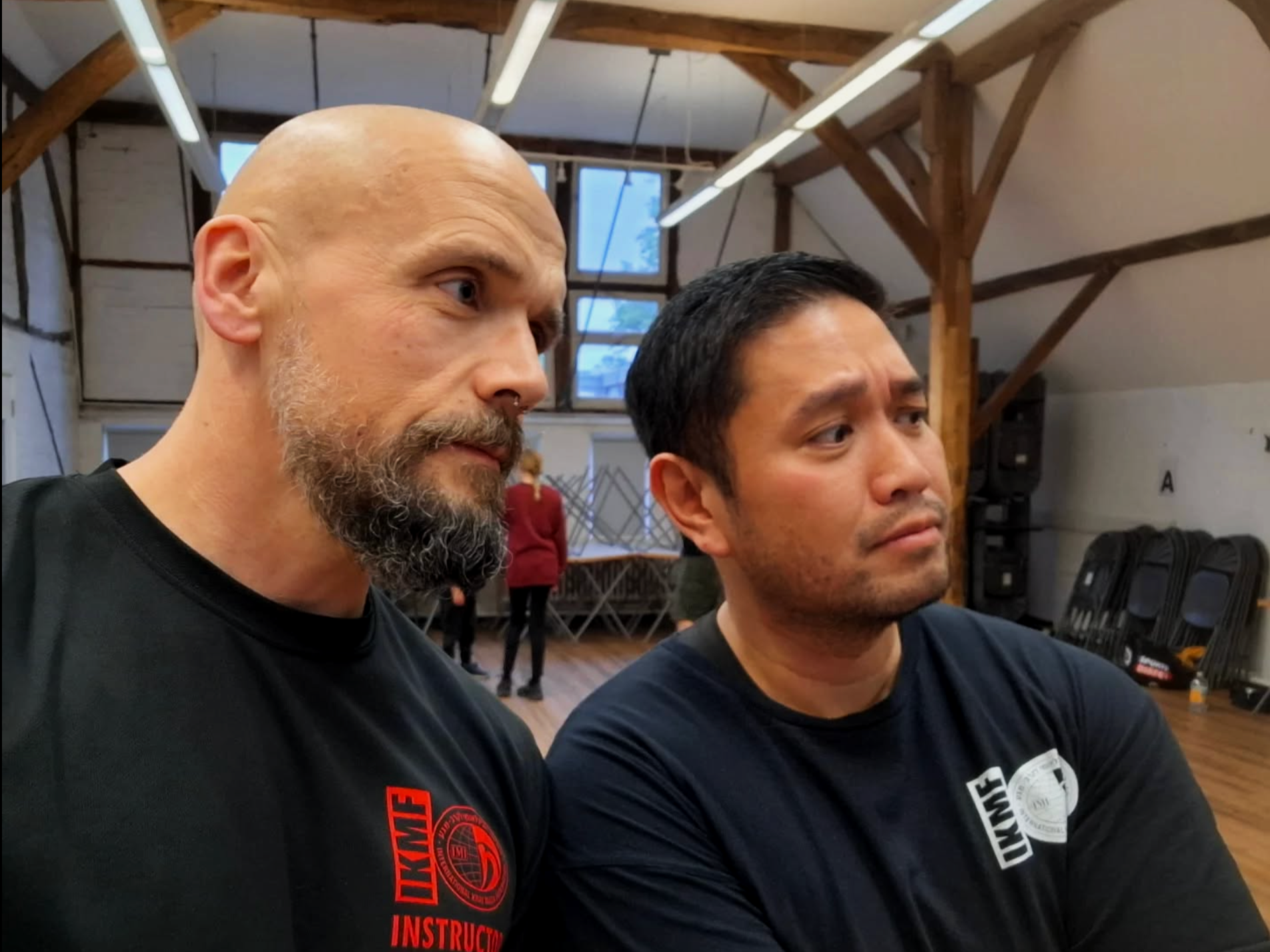
Thoughtful observer scanning the environment.
Mistake 3: Training Only in Ideal Conditions
In most beginner classes, techniques are practised in clean conditions. Good lighting, a willing partner, plenty of space. The real world is not like this.
Attacks happen in cramped spaces, low light, and on uneven ground. Beginners who train only in perfect conditions often find that their techniques feel completely different when something unexpected changes.
The fix: Ask your instructor to introduce variable conditions once the basics are solid. Practise with reduced space, different starting positions, and different types of resistance. Even small variations build adaptability.
Mistake 4: Forgetting to Use Your Voice
Under stress, many people go quiet. Their voice disappears exactly when they need it most. A loud verbal challenge can stop a confrontation before it becomes physical, draw bystanders in, and interrupt the attacker's momentum.
The fix: Practise your verbal response in training. Every time you drill a technique, add a vocal response. Shout "Back off!" as you strike. This feels strange at first but builds a connection between the physical and verbal response that carries into real situations.
Mistake 5: Trying to Win Instead of Escape
Self-defence is not a competition. The goal is never to beat someone in a fight. The goal is to stop the threat and get away safely. Beginners who have a "win the fight" mentality often stay engaged too long. They follow up a successful initial response with more strikes when they should be running.
The fix: Every technique should end with a question: "Am I safe? Can I escape now?" Train yourself to move toward an exit the moment the threat is disrupted. Success is getting away, not staying until the attacker is on the floor.
Mistake 6: Tensing Up Too Early
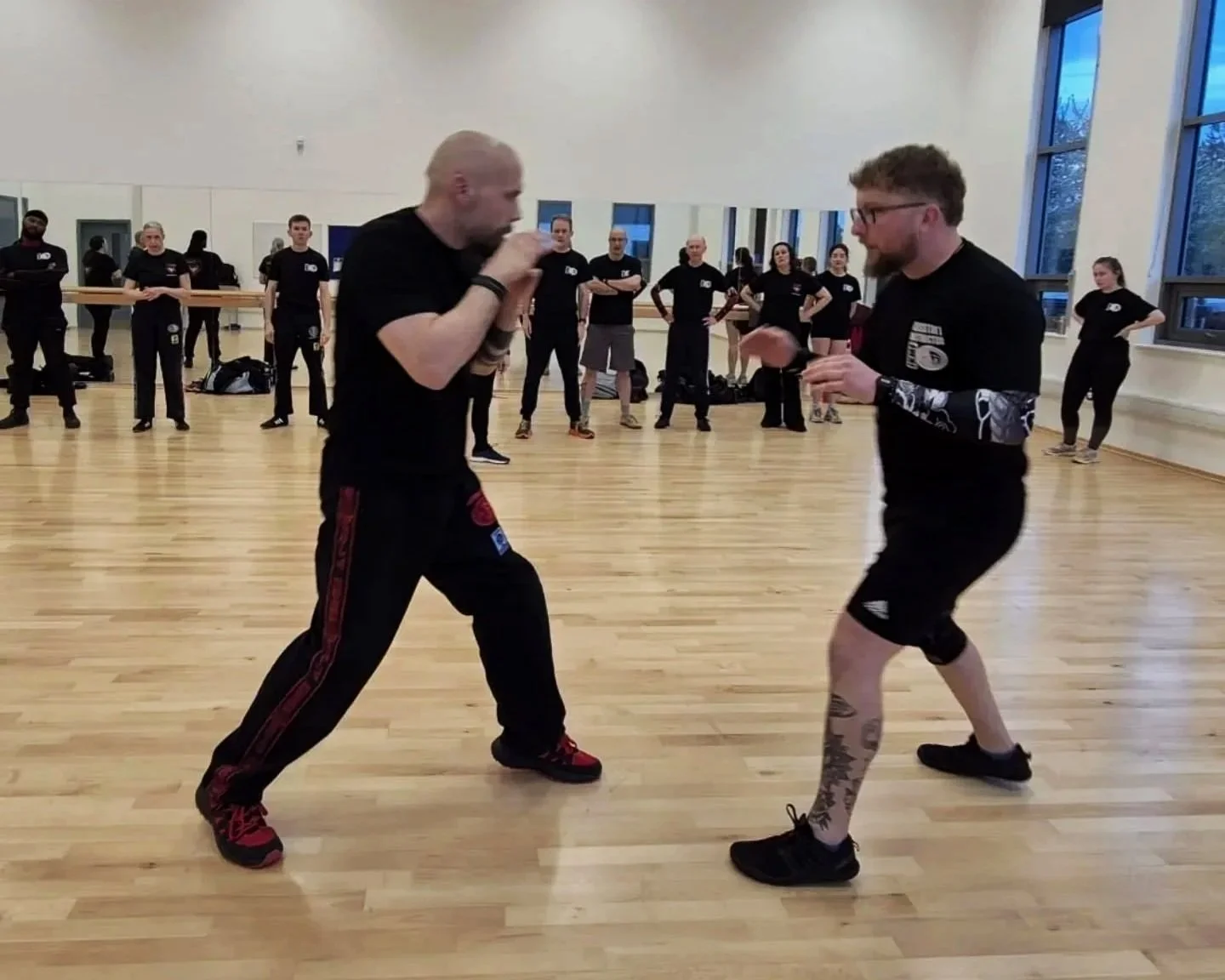
Instructors demo staying relaxed until moment of contact.
Tension is the enemy of technique. When beginners are nervous or expecting contact, they tense their whole body. This slows movement, reduces power, and burns energy fast.
The fix: Learn to stay relaxed until the moment of contact. In martial arts terms, this is sometimes called being "soft until hard."
Regular sparring and pressure drills gradually teach the body to stop over-tensing. Breathing exercises help too, slow, deliberate breathing before a drill lowers unnecessary tension.
Mistake 7: Not Practising Under Stress
Drilling a technique slowly and cleanly is the starting point. But technique needs to be practised under some level of stress to become reliable. A calm repetition is not the same as a technique performed with an elevated heart rate.
The fix: Ask for pressure testing once you have the basics. This does not mean sparring from day one, it means introducing an element of unpredictability or mild resistance so your nervous system learns to apply the technique under imperfect conditions. Even light scenario role-play achieves this.
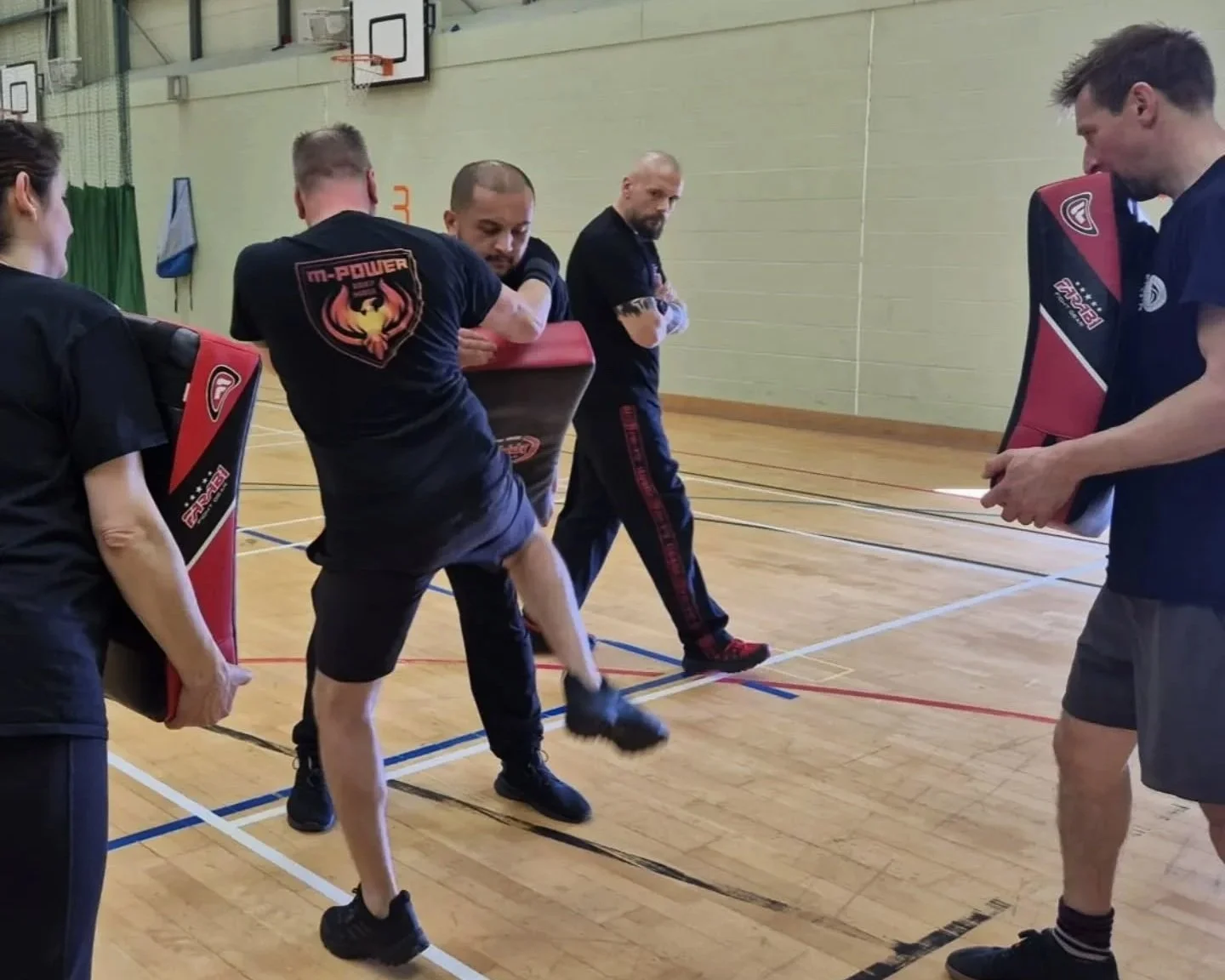
M-Power Krav Maga stress drills at the end of each session.
Mistake 8: Overcomplicating Things
Some beginners try to learn as many techniques as possible, collecting moves from YouTube, different instructors, and different martial arts. This feels productive but it is not.
The brain cannot reliably access complex techniques under adrenaline. When a real situation develops, you will default to what you have drilled most.
A complex technique you have practised five times is far less useful than a simple strike you have drilled five hundred times.
The fix: Embrace fewer techniques practised more deeply. Work on depth, not breadth. Learn three things really well before you add a fourth.
Mistake 9: Skipping the Debrief
After a drill or scenario, many beginners move on immediately without reviewing what happened. This misses a huge learning opportunity.
The fix: After each practice, take thirty seconds to reflect. What worked? What felt wrong? Where did your awareness fail? What would you do differently? This habit builds self-awareness and accelerates progress. Good instructors will prompt this debrief, but you can do it independently too.
Mistake 10: Training Inconsistently
Self-defence skills are perishable. The muscle memory, the conditioned awareness, the stress responses you build in training, all of these degrade without regular practice.
Many beginners train intensively for a few weeks, then stop. When they come back months later, they have lost much of what they built.
The fix: Train consistently, even if it is only once a week. One session per week, every week, will build far more durable skill than a six-week intensive followed by a three-month gap. Consistency is the most underrated factor in self-defence training.
FAQ: Beginner Mistakes in Self-Defence
How quickly can a beginner develop reliable self-defence skills?
With one to two sessions per week, most beginners have a solid practical foundation within three to four months. The key is consistent training over time, not cramming as much as possible into a short window.
What is the biggest mistake people make in a real confrontation?
Freezing and waiting for the situation to resolve itself. Training specifically addresses this by building the mental habit of taking action early, whether that means leaving, setting a boundary, or defending yourself.
Should I try multiple styles of self-defence?
Not in the beginning. Pick one good school and build your foundation there first. Once you have solid basics, exploring other styles becomes much more useful. Jumping between styles too early is one of the reasons people stall.
Do I need a partner to practise?
A training partner makes most techniques significantly more effective to practise. That said, visualisation, shadow drilling, and awareness practice can all be done solo. Group classes at a school like M-Power Krav Maga give you access to regular partner work in a supervised, safe environment.
Is it normal to feel overwhelmed in the first few sessions?
Completely normal. You are learning physical, verbal, and psychological skills simultaneously while also being in a new social environment. Give yourself four to six sessions before judging whether it suits you.
Fix One Mistake at a Time
You do not need to address all ten at once. Pick the one that resonates most, bring it to your next training session, and work on it.
Self-defence training rewards patience and consistency. The people who improve fastest are not those who train the hardest, they are the ones who turn up regularly, stay honest about their weaknesses, and fix them one at a time.
If you are ready to start, or you want to restart with better habits, M-Power Krav Maga offers beginner classes in Reading with experienced instructors who will help you build a strong foundation from the first session.
or