Functional Fitness for Self-Defence: Strength, Speed & Endurance Training Guide
There is a specific type of fitness that makes a real difference in a self-defence situation, and it is not the type you build by isolating muscles on a weight machine or running on a treadmill for forty minutes. It is functional fitness: the ability to move your whole body powerfully, quickly, and efficiently in real-world conditions.
This guide explains what functional fitness for self-defence looks like, why it matters, and how to build it whether you are training in a class or doing sessions at home.
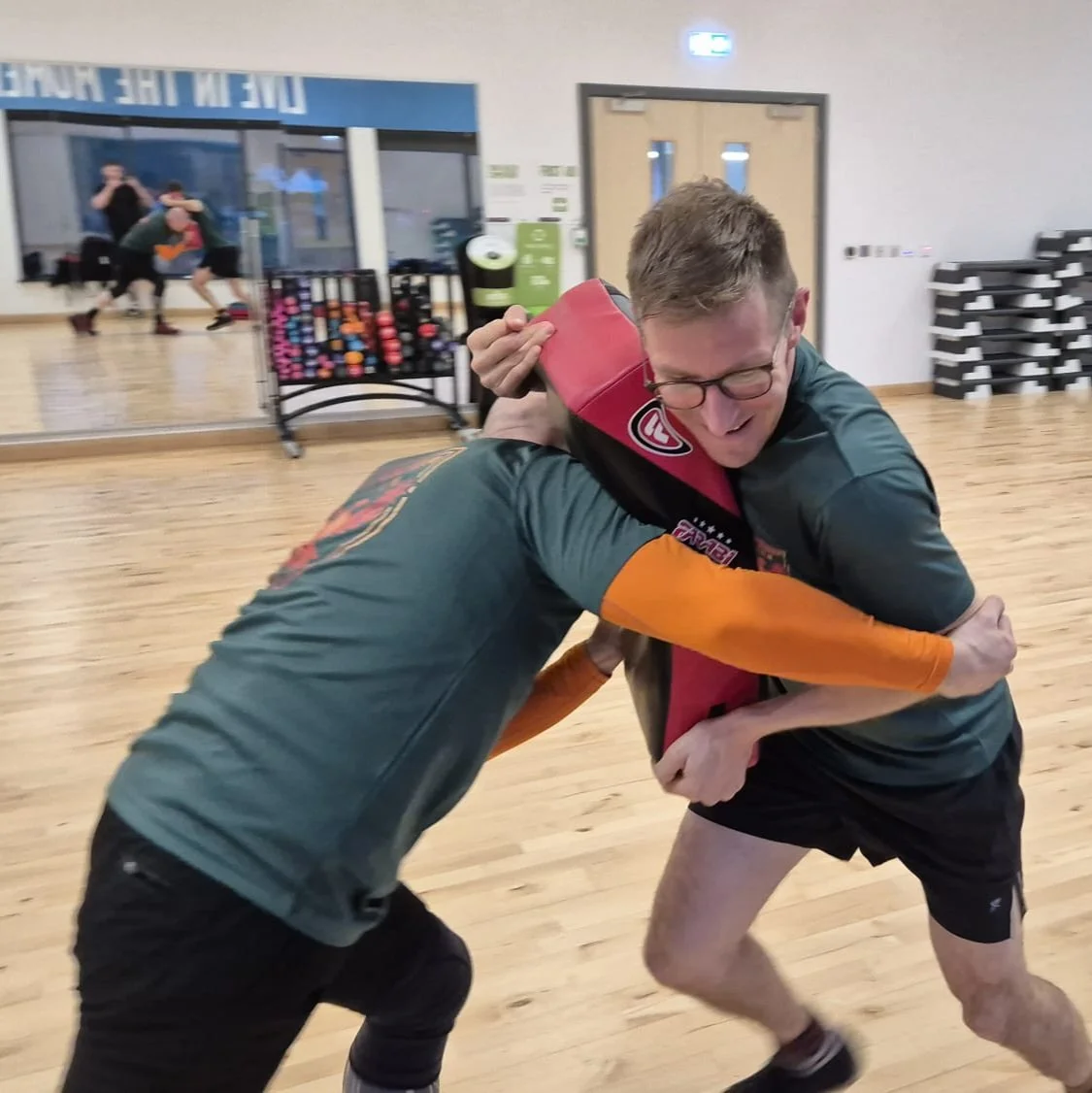
What Is Functional Fitness?
Functional fitness is training that develops the physical qualities used in real movement: strength through full ranges of motion, multi-directional agility, explosive power, endurance under stress, and balance and coordination.
A bicep curl builds isolated arm strength. A press-up combined with a sprawl and a jump builds upper body strength, explosive lower body power, and the ability to transition between positions quickly. One of these is functional for self-defence. The other is not.
The qualities that functional fitness develops, and that are directly relevant to self-defence, are:
Explosive power. The ability to generate force quickly. Striking, pushing, breaking free from a grab: all require explosive output in a very short time window.
Multi-directional speed. Not just running in a straight line, but moving sideways, changing direction, closing or creating distance quickly. This is agility as it applies to a real threat scenario.
Endurance under stress. An adrenaline-fuelled confrontation is physically demanding even if it lasts only seconds. The body is running hot. Functional endurance means your physical and cognitive performance does not collapse under that load.
Body control. The ability to stay balanced, recover from a stumble, get back to your feet quickly. Body control is what prevents a fall from becoming a catastrophe.
Grip and pushing strength. Not for overpowering someone, for breaking free from a grab, maintaining posture, and executing techniques that require upper body involvement.
The Three Pillars of Self-Defence Fitness
1. Strength: But Not the Way You Think
Self-defence does not require impressive maximal strength. It requires functional strength applied through the right movement patterns.
The most relevant strength movements are:
Press variations (press-up, push press): pushing strength for strikes and escape
Row variations (band pull, single-arm row): pulling strength for grab escapes and body control
Hinge movements (deadlift, hip hinge): lower back and hip strength for stability and explosive hip drive in strikes
Squat, lunge and bridge patterns: leg strength for movement, posture, and recovery
Aim for moderate weight across full range of motion rather than heavy loads with restricted movement. Bodyweight training is highly effective for self-defence functional strength.
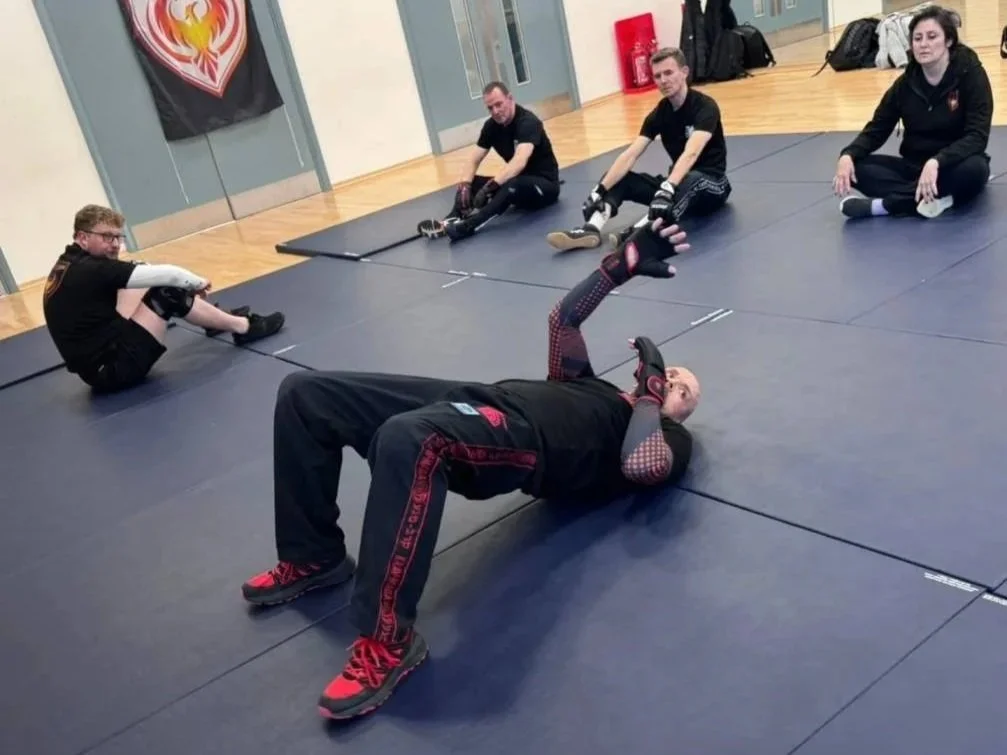
2. Speed and Agility
Reaction time and multi-directional movement are trained very differently from gym strength work.
Effective speed and agility drills for self-defence:
Lateral shuffles over short distances (2-3 metres)
Direction change drills (T-drill pattern, cone weave)
Reaction drills with a partner calling direction changes
Explosive first step work, the first one or two steps of a sprint are what matter most in a self-defence context, not top speed
In M-Power M.A.C.E, our agility and combat endurance class, these drills are built into every session. They are challenging, effective, and genuinely enjoyable once you get past the initial shock of how hard quick changes of direction are.
3. Functional Endurance
Functional endurance for self-defence is not the same as marathon fitness. The energy system most relevant is the anaerobic threshold: the zone where you are working hard for 15-90 seconds, recovering briefly, and going again.
Circuit training, interval work, and scenario-based training all develop this. The goal is to maintain technical quality when your heart rate is elevated, to be able to apply a technique at 85% of maximum heart rate as effectively as you can at rest.
This is specifically what self-defence training develops, which is one reason it is superior to general gym cardio for this purpose.
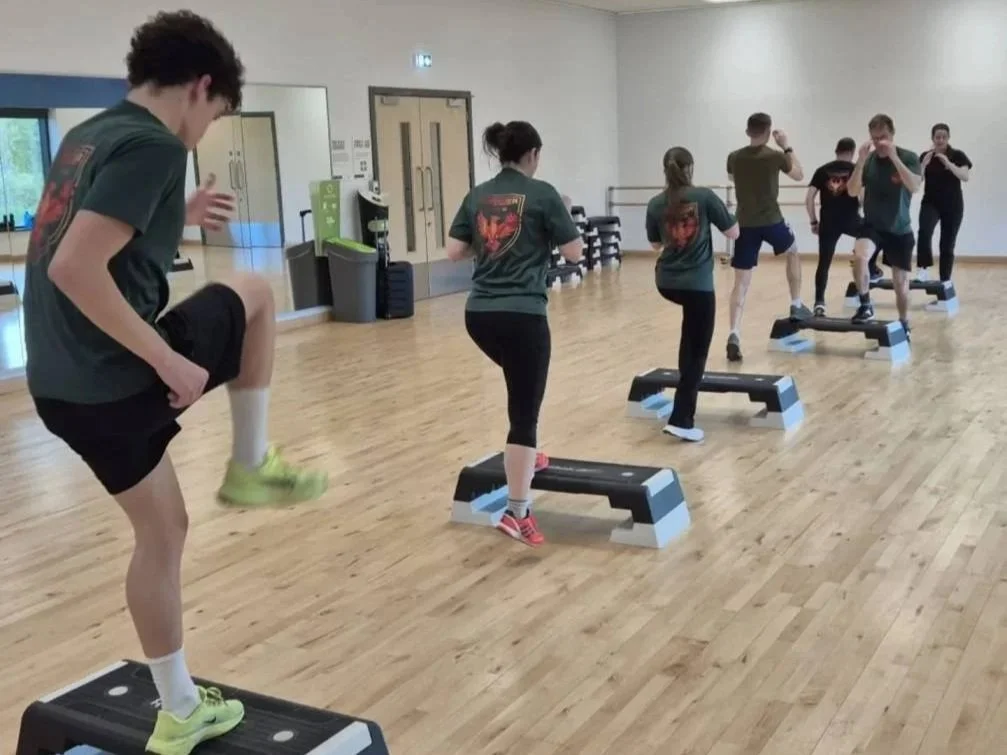
A Sample Functional Fitness Session (No Equipment)
You do not need a gym to build self-defence fitness.
This session takes 30-35 minutes:
Warm-Up (5 minutes)
Joint rotations (neck, shoulders, hips, knees, ankles)
10 leg swings each side - 20 arm circles each direction
Light jog, high knees, heel flicks (30 seconds each)
Main Circuit, 3 rounds, 40 seconds on / 20 seconds rest:
Jump squats (explosive lower body)
Sprawls (hip mobility + quick stance recovery)
Press-ups (upper body push strength)
Lateral shuffle 2 metres each side (agility)
Mountain climbers (core + endurance)
Explosive split lunges (leg strength + power)
Interval Finisher, 4 x 30 seconds:
Full effort forward-backward sprint drill with 30-second recovery between rounds.
Cool-Down (5 minutes):
Hip flexor stretches, hamstring stretches, shoulder and chest stretch, spinal rotation.
How Self-Defence Training Develops Fitness Naturally
Here is something worth knowing: consistent self-defence training at M-Power Krav Maga develops functional fitness as a byproduct of learning to defend yourself. The techniques, the drilling, the scenario work, all of it builds the strength, speed, and endurance described in this guide.
You do not need to separate your fitness training and your self-defence training. In a good class, they are the same thing.
Many people who describe themselves as "not sporty" and come to self-defence training purely for safety reasons find within a few months that their physical fitness has changed more than it ever did from going to the gym.
FAQ: Functional Fitness for Self-Defence
Do I need a good fitness base to start self-defence training?
No. Classes are structured for all fitness levels and build progressively. Your fitness will improve naturally through the training itself. You do not need to "get fit first."
Is functional fitness the same as CrossFit?
There is overlap. CrossFit uses functional movements and high-intensity interval structures. Self-defence functional fitness uses similar principles but designed for movement patterns specifically relevant to defence scenarios: explosive first step, multi-directional agility, and strength through the same ranges as defensive and striking techniques.
How often should I train for functional fitness alongside self-defence classes?
Two to three sessions per week, including your self-defence class, is enough to see significant fitness progress. If you are adding standalone functional fitness sessions, one or two additional sessions per week is plenty.
Will self-defence training help me lose weight?
Consistent, high-intensity training combined with any attention to nutrition will support body composition change. Self-defence training is effective cardiovascular exercise that also builds functional muscle, which supports metabolism. It is not a weight-loss programme, but the fitness benefits are real and significant.
What is the most important fitness quality for self-defence?
Functional endurance under stress, the ability to maintain technique and decision-making quality when your heart rate is elevated and adrenaline is running. This is trained specifically through scenario-based drilling and interval work, both of which are central to M-Power Krav Maga’s training approach.
Start Building the Right Kind of Fitness
General fitness is valuable. Functional fitness for self-defence is specific and purposeful. Every session builds both the physical capability and the self-defence skills simultaneously, which is why it is far more efficient than separating them.
M-Power M.A.C.E and self-defence classes in Reading are designed to develop real-world physical capability while teaching practical safety skills. Try a session and see what functional fitness actually feels like.