

What does Krav Maga mean?
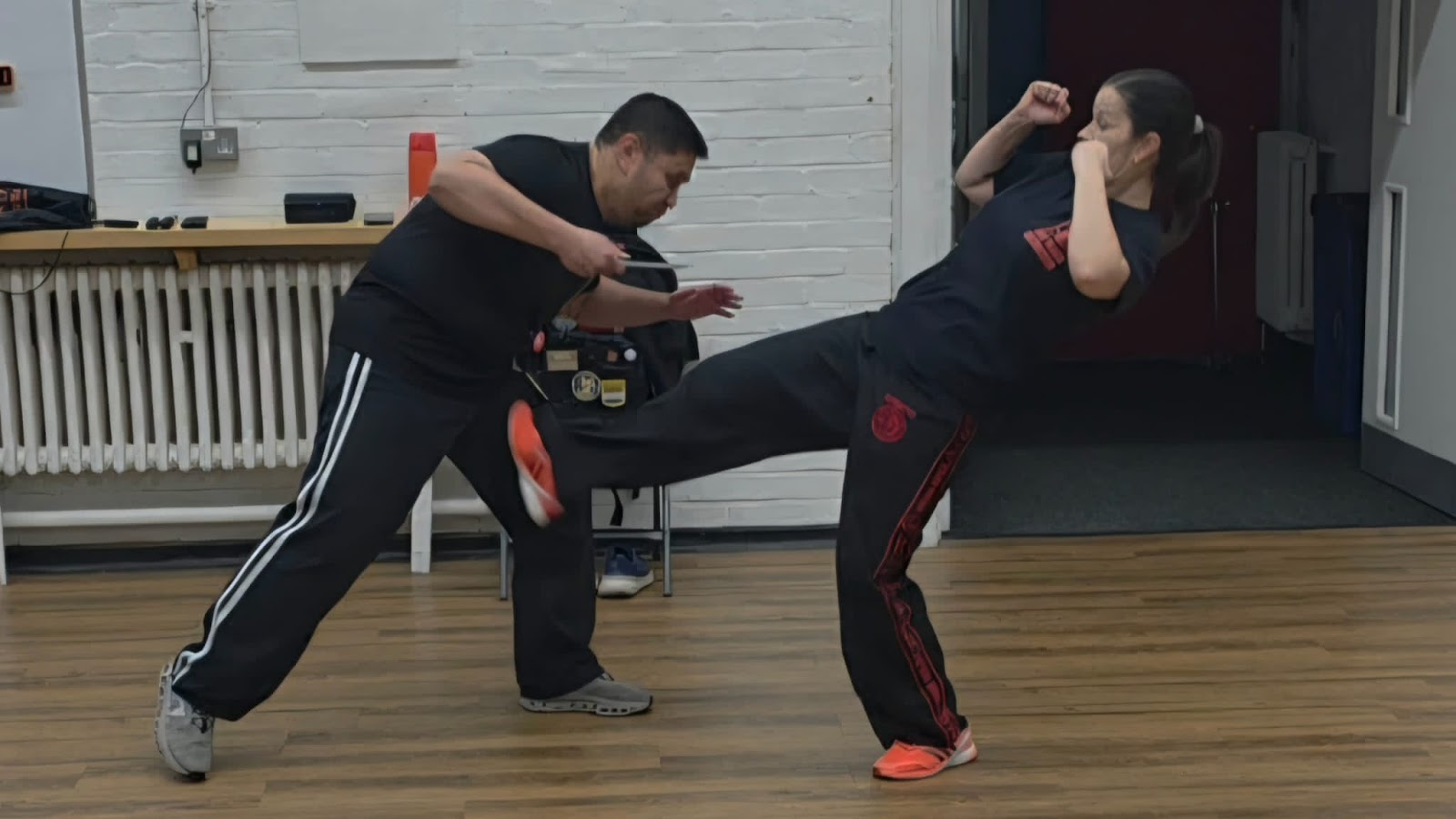
“Krav” means combat and “Maga” means contact, so Krav Maga is “contact combat”. The name is a good summary of the system. It is about what to do when a threat is close enough to threaten you: a grab, a push, a punch or a weapon.

Where does Krav Maga come from?
Krav Maga was created by Imi Lichtenfeld, who was born in Budapest in 1910 and grew up in Bratislava. Imi was a champion boxer, wrestler and gymnast. In the 1930s he and his friends defended their neighbourhood against violent gangs, and he learned that sport fighting and real street violence are very different things. In a real attack there are no rules, no rounds and no referee.
Imi later taught hand-to-hand combat and fitness to the military. The training had to work for soldiers of every size and background, and it had to be learned quickly.
From the military to everyday life
When Imi left the military, he adapted the system for civilians. He wanted people of any age, size or fitness level to be able to protect themselves and the people they care about. That is the version we teach: the same principles, built for real life on the street, at work or on a night out, not for a battlefield.
Today Krav Maga is taught all over the world. Our club follows the IKMF (International Krav Maga Federation) syllabus and regulations. Our instructors are regularly updated by expert-level instructors. You can meet them on our team page.
Physics, not strength
Krav Maga is not about meeting violence with more strength. Most attackers will be bigger or stronger than the person they choose, so a system that relies on strength would let most people down. Instead, we use physics:
- Leverage. Using the body’s joints and angles so a smaller person can break a stronger grip.
- Natural reactions. Building on the way your body already flinches and protects itself, so techniques are quick to learn and hard to forget.
- Defending and counter-attacking together. Not waiting for the attack to finish before you respond.
- Simple, repeatable moves. A small number of techniques that work in many situations, practised until they are automatic. Give a surprise to your attacker, who will underestimate you!

Avoid, defuse, defend
Krav Maga is not about looking for a fight. The best fight is the one that never happens. That is why our training follows three steps: avoid danger where you can, defuse a situation with your voice and body language when you cannot, and defend yourself only when you have to. Our guide to situational awareness covers the first step in more detail.
What a Krav Maga class looks like
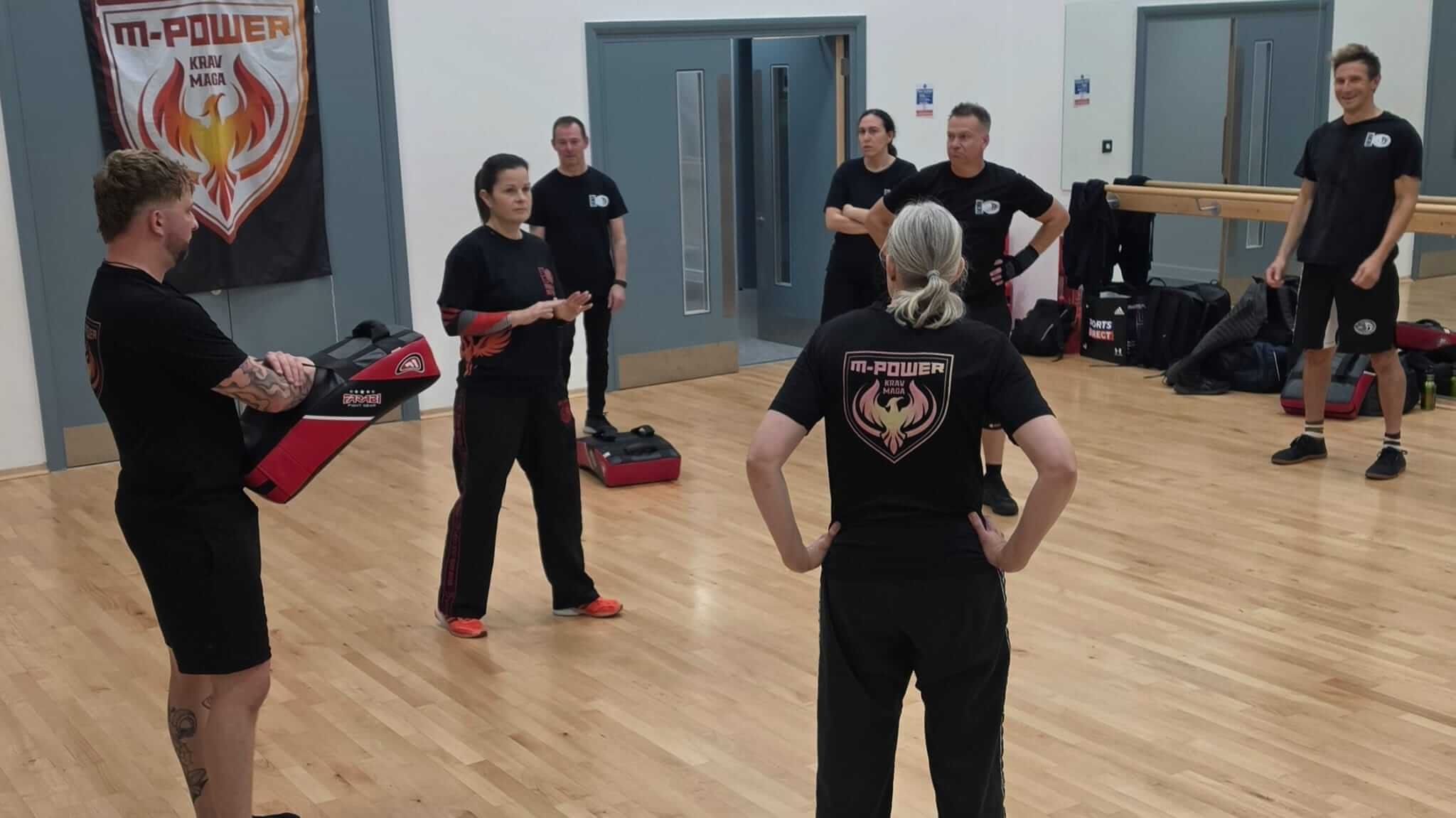
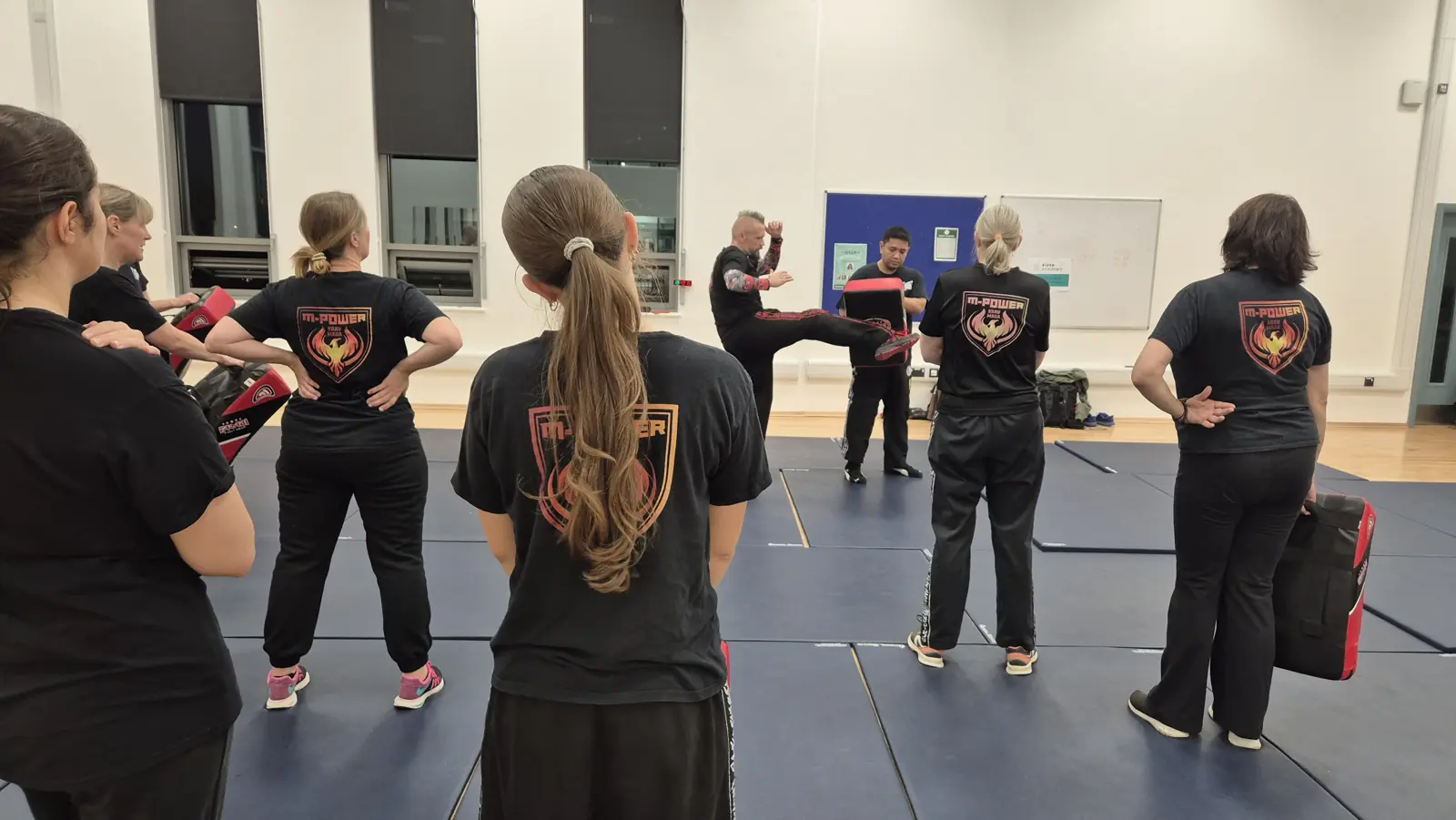
A class at M-Power starts with a warm-up, moves on to a few simple techniques, puts them into practice with a partner, and finishes with a short drill. You set your own pace, and you do not need to be fit or have any experience to start. Our guide to what to expect at a trial class walks you through it step by step.
Questions people ask about Krav Maga
Is Krav Maga a martial art?
It is often called one, but Krav Maga is a self-defence system rather than a sport. There are no competitions or points. Everything we train is aimed at getting you home safely.
Is Krav Maga useful in a real fight?
It was designed for real situations, which is why we train with pressure, surprise and fatigue. Training with us regularly will give you skills and confidence you can rely on. Also, the system is constantly evolving, the leaders of the organisation continuously working on updating the techniques and testing the syllabus.
Is Krav Maga legal in the UK?
Yes. Learning Krav Maga is completely legal, and UK law allows you to use reasonable force to protect yourself. That is another reason we put avoiding and defusing first.
How long does it take to learn Krav Maga?
You will learn something useful in your first class. Most members feel noticeably more confident within a few months of regular training, and the grading system gives you clear goals along the way.
Try Krav Maga in Reading
We run classes in Reading and Caversham on Monday, Thursday and Saturday, including a family class for ages 12 and over. See all the times and venues on our classes page, read more about why we train, or compare your options in our guide to self-defence classes in Reading. When you are ready, book a £10 trial class and see what Krav Maga feels like for yourself.
M-Power. Your best defence starts here.